

Most business owners already know what they should be doing. The hard part is actually doing it.
That's the gap my guest this week has built his entire business around. Allen Weaver is the founder of Nesh Consulting, based right here in Norwalk, Iowa. He spent years building salespeople and teams inside a nationally recognized sales training organization, and he noticed something big along the way: the frameworks alone didn't change people. What changed people was the conversation after the framework.
Today Allen coaches small business owners, leaders, and teams all over the country, with clients like Northwestern Mutual, Farm Bureau, RE/MAX, and Wartburg College. His belief is simple: grow the person, transform the business.
Here's the rundown.
A Military Kid Raised on Coaching Questions
Allen grew up as a military kid. He was born in Montana and moved to Mississippi, Kansas, Korea, England, and Germany before landing at Wartburg College. That's what brought him to Iowa, and meeting his wife at college is what kept him here.
Seeing so much of the world at a young age put a lot of life in perspective for him. But the biggest influence was his dad, a First Sergeant in the military. If you're not familiar with the role, Allen describes it as part counselor, part father figure for the soldiers in the squadron. His dad helped people think differently, worked through problems with them, and sometimes got them out of trouble.
Those coaching questions came home, too. Growing up, Allen's dad would ask him:
What can you control?
What can't you control?
What do we do to make sure this doesn't happen again?
Allen thought every dad did that. When he tells the story now, people stop him and say, "Do you understand how cool that is?" Today his dad runs his own coaching and leadership business, named after the Korean word for "father."
After college, Allen went into sales and climbed through sales and leadership roles. When someone once asked him for his biggest career accomplishment, his answer wasn't a number. It was seeing the leaders he partnered with win. Eventually he searched "sales coaching" online, found Southwestern Consulting, and spent four years there before deciding he could make a bigger impact on his own.
How Do You Coach an Industry You've Never Worked In?
This is a question I've always wanted to ask Allen. People usually look for a coach who has done exactly what they want to do. Allen coaches realtors, builders, and business owners across all kinds of industries. He doesn't run a million dollar real estate team or build homes. So how does that work?
His answer: sales is a transfer of emotion. Whether you're in mortgage, real estate, or insurance, you're finding and developing a need for someone and helping them meet it. Even getting your spouse to see value in you was kind of a sale. 😂
What really carries across industries is processes and systems. The mortgage process and the real estate process work the same way underneath. We just use different words.
What No Ego, Stay Humble Really Means
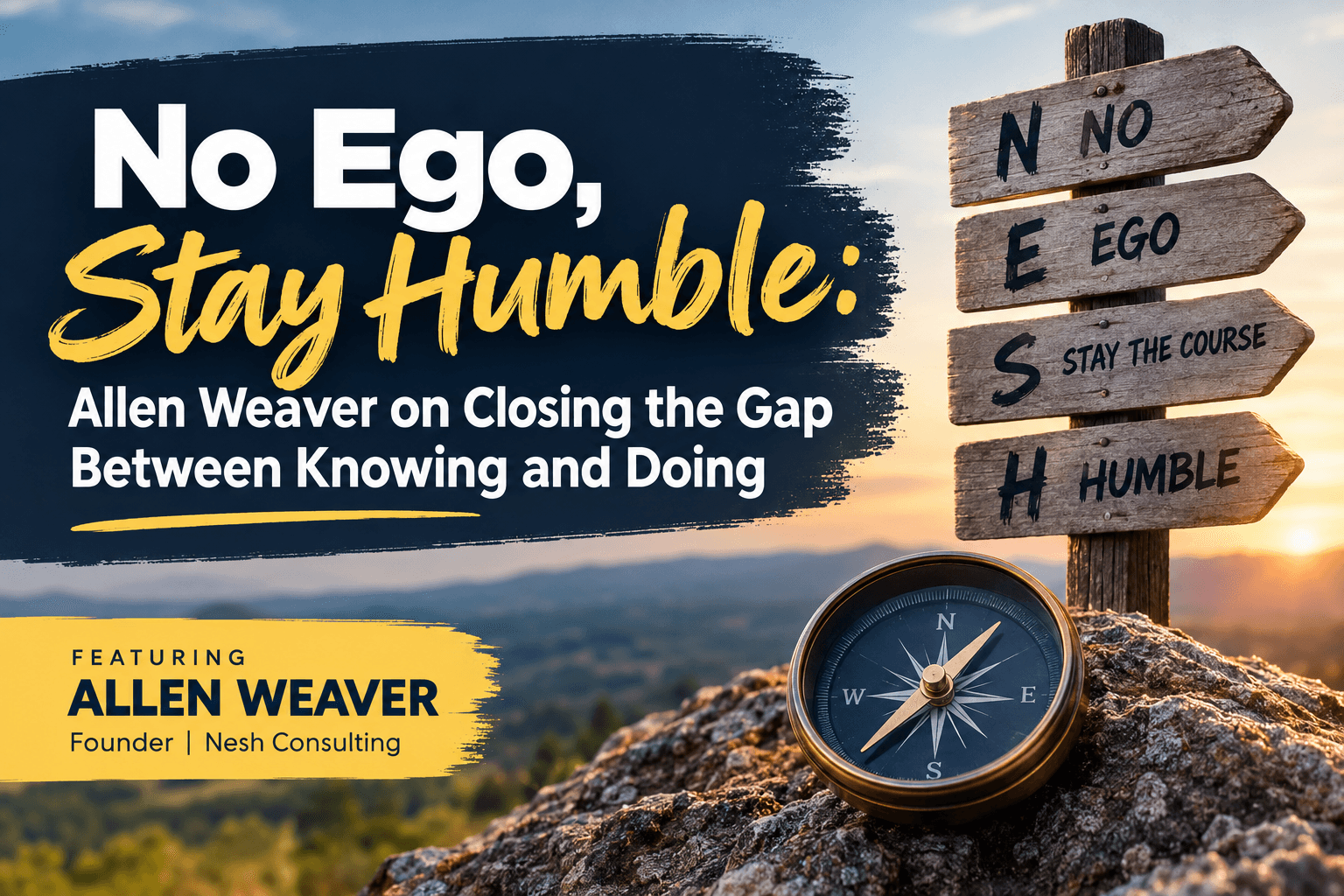
Nesh stands for No Ego, Stay Humble, and each letter carries a piece of Allen's philosophy:
N is for No. Saying no to the things that pull you away from what you know you need to do.
E is for Ego. Understanding that ego is different from confidence, and sometimes you have to set your ego aside to be willing to learn.
S is for Stay the course. Build the plan and stick to it. You can adjust a little, but stay on the plan.
H is for Humble. Being humble enough to know growth never stops. Whether you're a new parent, a new spouse, or a new leader, there's always an area to grow.
The Hardest One for Leaders: Humble
When I asked which of the four business owners struggle with most, Allen said humble.
He'll hear leaders say, "Why don't they just do what they need to do?" His response: what if they don't know how?
In his workshops, Allen asks groups of leaders to define a good leader. Everyone rattles off the answer: pour into your people, be a servant leader, remove roadblocks, give your team tools to succeed. Then he asks the follow-up question: "Is that what you do?"
A few faces always change. But Allen isn't calling anyone a bad leader. The goal is to find ways to do the things they already know, more consistently. We all have a little ego. Being humble means admitting you might not have all the answers.
Procrastination Might Be a Knowledge Problem
Allen referenced something Ryan Leak said on another podcast that really stuck with me. Most people think procrastination means a lack of drive. But what if procrastination is really just not knowing how?
Here's a simple test Allen gives leaders who say their team isn't doing something: if you sat down with them and asked them to walk you through the process, could they actually do it? If the answer is no, it's not a motivation problem. It's a training problem.
Do It Scared
The other side of procrastination is overpreparing. I see it all the time. People spend so much time getting ready that they never actually start.
Ninety-seven episodes ago, I had no idea what I was doing with this podcast. I found Riverside, grabbed the free 30-day trial, and figured I'd see what happened. The early videos weren't pretty. I'm still not a video editor. But this show was never about looking perfect. It's about getting my guests' stories out there.
One of my most meaningful episodes was with a coworker who has Huntington's disease. Telling his story in person is really hard for him, but sitting down for the podcast let him tell it on his own terms, with the tough moments edited out. Now when someone asks, he can just send them the episode. If I'd waited until I had everything figured out, that episode never happens.
Allen's response? "Do it scared." One of his clients keeps a canvas that says "action cures fear." Accept that you're scared, walk through the worst thing that could happen, and then go do it anyway. And remember, people don't think about us nearly as much as we think they do.
I shared a story about an appraiser I talked to who is dealing with brand new appraisal guidelines and a totally different form. Her first report under the new rules took about three and a half extra hours. That's normal. You're great at the old way because you did it a thousand times. The new way takes repetition, too. Allen calls it accepting what is. We want instant success, but the things that feel quick were built over a long time.
Protecting Family Time
Allen sits a lot in his own thoughts, asking himself one big question that comes from the book Crucial Conversations: What do I really want? What does he want out of his relationship with his wife and his son, and how does he need to show up to get it?
His wife is a huge part of that. In Allen's words, having someone in your corner who believes in you more than you believe in yourself is a pretty cool thing.
About 85% of his clients come to him saying some version of the same thing: "I want to work smarter, not harder. I want to be more present at home." The answer is a system built around what actually matters, followed consistently. As Allen puts it, a lot of us confuse being busy with being consistent, and those are two different things.
He also plans around how he actually works. Allen knows he can't make phone calls for two hours straight, so he doesn't schedule two hours of calls. Why build a plan that's set up to fail?
That's also why he and his wife are up around 4:30 every morning. When his son was born, Allen realized he only got to see him four or five hours a day between daycare and work. So he gets his workout in early and saves his evenings for family. Weekends look like shooting hoops at the gym with his five-year-old (going on sixteen), watching football, and squeezing in a 6:30 a.m. tee time so golf doesn't eat the whole day.
Quick Picks With Allen
A few highlights from our rapid-fire round:
Morning routine or night owl? Morning routine, all the way
Coffee or energy drink? A plant-based energy drink in the morning, not much caffeine after that
Favorite business book? The Subtle Art of Not Giving a F*ck, plus The Go-Giver, which four or five people (me included) recommended to him
Zoom or face-to-face? Whatever works best for the person across from him
Text or call? Call. "Just pick up the phone so we can talk." Amen.
Big goal or small daily wins? Both. Set the big goal, then break it into monthly, weekly, and daily activity
Podcasts or audiobooks? Both, and audiobooks over physical books
Paper planner or calendar app? Google Calendar
Hawkeyes or Cyclones? Michigan State. And with that, the episode was over. 😂
Best restaurant in the Des Moines metro? He's not picky, but Malo, Bubba, and South Union are on the list
Inbox zero? He keeps his business inbox at zero. His personal inbox is another story.
And my favorite answer of the day: Allen's pregame ritual before a big talk. Every Father's Day, he asks for a new pair of socks with his son's face on them. Before he speaks, he looks down, sees his son's goofy face (sometimes wearing goggles), and the nerves calm right down. It keeps him grounded every time.
Trending Topic: Is AI Actually Helping Small Business Owners?
AI tools are everywhere right now, and a lot of small business owners feel pressure to jump in. I asked Allen whether AI is actually helping owners move forward, or if it's just one more thing they know they should do and aren't doing.
Allen uses AI in his own business to connect with people, send updates and reminders, and build out resources. But AI is only as good as what you put into it.
He also brought up something called AI fatigue. His wife works in HR and once had more than 30 automated messages from businesses on LinkedIn. Her honest reaction? She didn't have time to look at any of them. Even great content gets ignored when it looks like everything else. The real goal is still getting a conversation with a real person, and that human touch matters.
I mentioned that Gary Vee recently said the businesses that thrived in the 1960s, like outdoor movie theaters, might be great businesses to start now. People are tired of screens and ready to unplug. Allen agreed: AI is a great tool, but people still want that human connection.
Connect With Allen Weaver
If you're a business owner or leader who knows what needs to change and you're ready to actually do it, Allen is a great person to talk to. And as he put it, it's never going to be a hard sell. It's just a conversation about whether it's a fit.
Website: neshconsulting.com, including a free business readiness assessment
Email: allen@neshconsulting.com
Phone: 319-230-1976
Listen to the Full Episode
There's a lot more in the full conversation, including how Allen's dad got him thinking like a coach as a kid, the do-it-scared mindset, and why Norwalk might need a few more restaurants. Search for The Lofty Lender with #TallMoneyMan wherever fine podcasts are downloaded. And if you've got questions about buying your first home, refinancing, or financing your next move, I'm just a call away at 319-850-2435.